
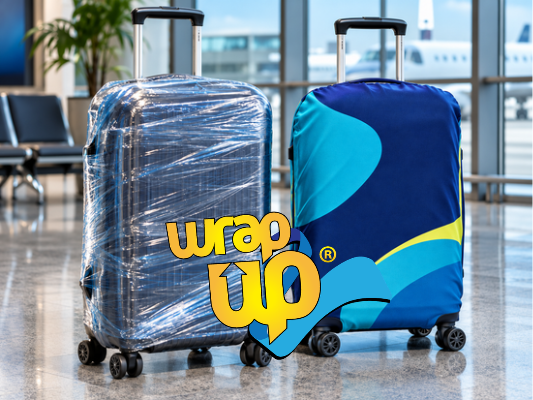


Luggage wrapping vs luggage covers: which option protects your checked suitcase better? Airport handling can expose bags to scratches, dirt, moisture, and damage. Plastic wrapping creates a temporary protective barrier, while a reusable luggage cover shields the exterior across multiple trips. In this guide, we compare protection, cost, convenience, and TSA inspections so you can choose what works best for your travel style.
That is why many travelers consider luggage wrapping vs luggage covers when preparing their checked bags. Both options add a layer of protection, but they serve different purposes.
Plastic wrapping creates a temporary protective barrier around your suitcase. A reusable luggage cover, meanwhile, helps protect its exterior while offering convenience across multiple trips.
So, which option is better for your travel needs?
In this guide, we compare protection, convenience, cost, durability, and TSA inspections to help you make a smarter decision before your next flight.
What Is the Difference Between Luggage Wrapping and Luggage Covers?
Although both options help protect checked luggage, their materials, applications, and benefits are different.
Plastic Luggage Wrapping: A Temporary Protective Barrier
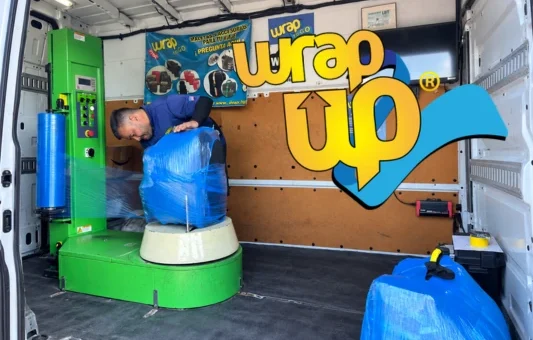
Plastic luggage wrapping involves applying multiple layers of stretch film tightly around a suitcase.
The film covers much of the luggage exterior, including zippers and seams, creating a temporary barrier against dirt, surface scratches, and incidental moisture.
One of its main advantages is tamper evidence. If someone opens a wrapped suitcase, the film generally must be cut or removed, leaving visible signs that the original wrapping has been disturbed.
Additionally, wrapping can help hold a suitcase together if a zipper becomes damaged during handling. However, it is not a substitute for properly functioning luggage.
Plastic wrapping is typically designed for single use and must be removed when you need access to your belongings.

- 【6-Piece Set 】This package includes 6 clear pvc luggage protector covers in sizes 20, 22, 24, 26, 28, and 30 to fit most…
- 【Transparent Design】Clear suitcase cover allows easy identification of your baggage at airports or hotels, eliminating c…
- 【Secure Fit】Features three hook and loop strips at the bottom to keep the luggage plastic cover firmly in place, prevent…
Reusable Luggage Covers: Practical Protection for Frequent Travelers
A luggage cover is a fitted protective sleeve placed over a suitcase.
Most covers are made from stretchable polyester, spandex blends, or transparent plastic materials such as PVC.
Unlike plastic wrapping, a suitcase cover can be removed, cleaned, and reused on future trips.
Its primary purpose is to reduce everyday wear, including surface scratches, scuffs, and dirt. Depending on the design, it may also make your luggage easier to identify at baggage claim.
However, most reusable covers do not create a tamper-evident seal around the suitcase.
Their effectiveness also depends on material quality, proper sizing, and how securely the cover stays in place.
Luggage Wrapping vs. Luggage Covers: Side-by-Side Comparison
Understanding how each option performs can make your decision easier.
| Feature | Plastic Wrapping | Reusable Luggage Cover |
|---|---|---|
| Scratch protection | Good surface protection | Good, depending on material |
| Dirt protection | Covers most exposed surfaces | Protects covered areas |
| Moisture resistance | Helps resist incidental moisture | Varies by material |
| Tamper evidence | Visible if wrapping is disturbed | Usually limited |
| Damaged zipper support | Can temporarily help hold a bag closed | Limited support |
| TSA inspection | May require cutting the film | Usually removable |
| Reusability | Single-use | Reusable |
| Typical cost | Paid each time | One-time purchase |
| Best suited for | Extra protection on selected trips | Frequent travel |
Neither option guarantees protection against theft, major impacts, or damage caused by improper baggage handling.
Instead, the best choice depends on what you want to protect against.

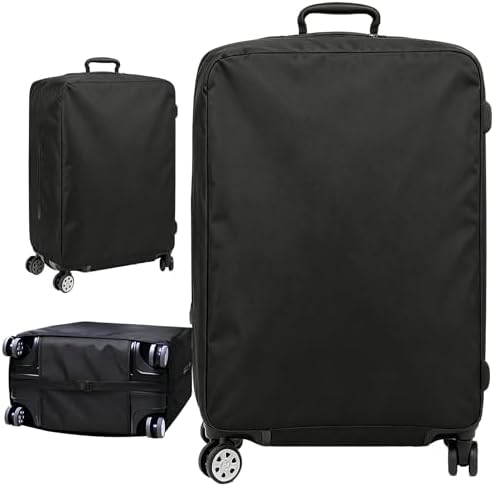
- Our luggage covers are made from 300g elastic, 8% spandex and 92% polyester, making them durable and washable.Stylish gr…
- Easy to install and remove. There are 2 openings at the top for the telescoping handle and carry handle, and there are s…
- Our luggage covers protect your luggage from dirt and scratches. Double stitching throughout, full stretch and high elas…
Which Option Offers Better Luggage Protection?
The answer depends on whether your main concern is cosmetic damage, unauthorized access, or convenience.
Protecting Your Suitcase From Scratches and Dirt
If your priority is keeping your suitcase looking presentable, both options can help.
A fitted luggage cover reduces direct contact between the suitcase exterior and surrounding surfaces. This can be particularly useful for hard-shell luggage, where scuff marks may become noticeable over time.
Plastic wrapping provides a similar protective layer. Because the film fits closely around the suitcase, it can also cover seams and other exposed areas.
However, neither method prevents dents, cracked wheels, broken handles, or structural damage.
Reducing the Risk of Undetected Tampering
This is where plastic wrapping has a distinct advantage.
When properly applied, the film forms a visible barrier around the suitcase. Opening the bag generally requires disturbing that barrier.
As a result, wrapping may make unauthorized access more noticeable.
A reusable luggage cover can usually be removed and replaced without leaving obvious evidence.
Still, tamper evidence is not the same as theft prevention.
Someone determined to access a suitcase can cut through wrapping or remove a cover.
For this reason, travelers should keep important documents, jewelry, essential medications, and valuable electronics in their carry-on luggage whenever permitted.
Protection Against Rain and Spills
Airport baggage can occasionally encounter rain, spilled liquids, or damp surfaces.
Plastic wrapping helps limit direct exposure to incidental moisture. However, gaps around wheels, handles, and other openings mean it should not be considered fully waterproof.
Reusable covers offer different levels of moisture resistance.
Some polyester covers provide basic protection, while certain plastic covers resist water more effectively.
For either option, sensitive belongings should also be protected inside the suitcase.

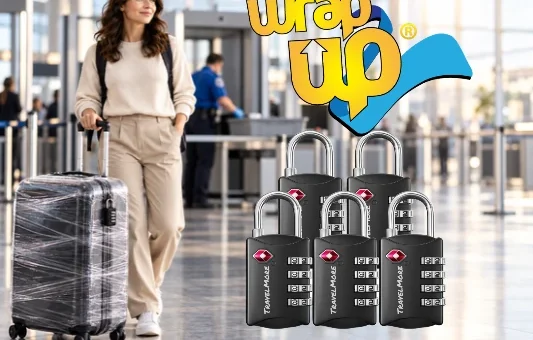
- Suggested uses, luggage, backpacks, bags, small cabinets, briefcases, computer bags, for indoor use only
- Tsa – Accepted luggage lock ideal for air travel
- Durable metal construction
Is Luggage Wrapping More Expensive Than a Reusable Cover?
Cost is another important difference when comparing luggage wrapping vs luggage covers.
The Cost of Plastic Luggage Wrapping
Plastic wrapping is generally priced per suitcase and per application.
For example, airport wrapping services may cost around $30 per bag, although prices depend on the airport and service provider.
For travelers departing from South Florida, WrapToGo offers luggage wrapping at home starting at $9.99 per suitcase when wrapping two or more bags, with weighing included.
Because wrapping is single-use, the cost increases with each new application.
The Long-Term Value of Reusable Luggage Covers
A reusable luggage cover may cost approximately $25–$60, depending on its material, quality, and size.
Although the initial purchase may be more expensive than one wrapping service, the cover can be used repeatedly.
Consider a traveler who protects two checked bags on four departures throughout the year.
At an illustrative wrapping price of $9.99 per bag, eight applications would cost approximately $79.92.
At $30 per bag, those same eight applications would total $240.
By comparison, two reusable covers costing $25–$60 each would require an initial investment of approximately $50–$120.
Therefore, frequent travelers may save money with reusable covers over time.
However, wrapping can still offer better value when a traveler specifically wants a tamper-evident barrier for an occasional trip.
These prices are illustrative and may vary by location, provider, material, and additional service charges.
What Happens if TSA Needs to Inspect Your Wrapped Luggage?
Security screening is an important consideration before choosing either option.
The Transportation Security Administration (TSA) may open checked baggage when additional inspection is necessary.
Can TSA Remove Plastic Wrapping?
Yes. If a suitcase requires physical inspection, TSA officers may need to cut or remove its plastic wrapping.
The original wrapping should not be expected to remain intact or be replaced after the inspection.
Therefore, travelers should understand that wrapping does not prevent authorized security inspections.
For current screening procedures, consult the Transportation Security Administration’s official travel guidance.
Are Reusable Luggage Covers Easier to Inspect?
In many situations, yes.
A removable cover generally allows access to the suitcase without cutting through layers of plastic film.
However, officers may need to remove the cover, and difficult-to-remove designs can complicate the inspection.
A well-fitting cover that is easy to remove and reinstall may be more convenient.
Travelers may also consider a TSA-recognized luggage lock, which allows authorized inspection using compatible tools. Even then, no lock or protective cover makes luggage completely theft-proof.

How to Choose the Right Protection for Your Travel Style
Not every traveler needs the same luggage protection.
Before making your decision, consider your travel frequency, suitcase condition, destination, and budget.
Choose a Reusable Luggage Cover If You:
- Travel frequently for business or leisure.
- Want to reduce everyday scratches and scuffs.
- Prefer a reusable option instead of disposable wrapping.
- Want to make your suitcase easier to recognize.
- Value convenience and lower long-term protection costs.
A durable, properly fitted cover can be a practical accessory for a suitcase you use regularly.
Choose Plastic Wrapping If You:
- Want a visible indication that the original wrapping has been disturbed.
- Are preparing for a trip involving multiple baggage-handling stages.
- Need additional temporary protection against dirt or incidental moisture.
- Prefer a protective layer applied shortly before departure.
- Are using a wrapping service that also offers luggage weighing.
Keep in mind that wrapping does not compensate for broken luggage components or improper packing.
Can You Use Both?
Yes, but combining them is not always necessary.
For example, a traveler might use a reusable cover during everyday travel and choose professional wrapping for a particular itinerary.
Using both simultaneously may add bulk and complicate baggage inspections without providing a meaningful benefit.
A better approach is to select the protection that addresses your actual concerns.
Smart Packing Tips to Protect Your Luggage Before Every Flight
Whether you choose wrapping or a reusable cover, good packing habits remain essential.
Before checking your luggage:
- Check airline baggage limits. Confirm weight and size restrictions for your route and fare.
- Weigh your suitcase at home. Avoid unexpected overweight fees at the airport.
- Inspect zippers, wheels, and handles. Repair or replace damaged luggage before departure.
- Avoid overpacking. Excess pressure can strain seams and zippers.
- Remove outdated baggage tags. Keep only the identification needed for your current trip.
- Keep valuables in your carry-on. Do not depend on external protection to secure expensive belongings.
These steps help reduce avoidable problems, regardless of the protective method you choose.
Additionally, selecting well-constructed luggage can make a significant difference over time.
Strong seams, reliable closures, functional wheels, and appropriate bag dimensions are essential considerations.
Travel Smarter With the Right Luggage Protection
Choosing between luggage wrapping vs luggage covers comes down to your travel priorities.
Plastic wrapping is a practical option when you want temporary protection and visible signs of tampering.
Reusable luggage covers are often more convenient and economical for travelers who want to reduce everyday exterior wear across multiple trips.
Neither option replaces quality luggage, responsible packing, or smart travel habits.
Ultimately, protecting your belongings begins with choosing dependable travel equipment and preparing thoughtfully.
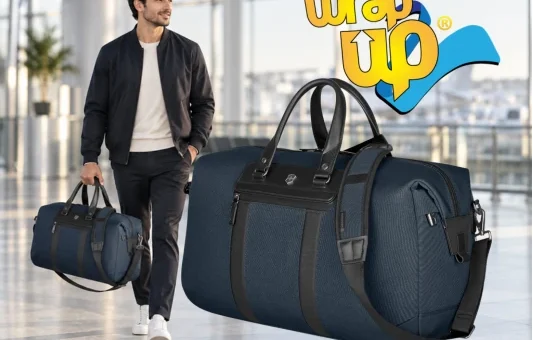
Smart travel starts with the right bag. Explore WrapUp’s collection of travel bags and accessories to find practical options for your next journey.
👉 You may be interested in: Can TSA Open Wrapped Luggage? What Travelers Should Know
🌍 Follow us and stay connected!
Discover our products, travel tips, exclusive discounts, and much more ✈️🎒


Hi, I’m Emerson Luzardo, founder of Luzarcan Group Inc., the parent company of WrapToGo and WrapUpShop. I’m a coach, speaker, and facilitator in Neuro-Linguistic Programming (NLP), with a focus on neuroscience and human behavior. Through my projects, I aim to transform the way individuals and businesses connect with their goals, their brand, and their environment.
Based in Miami, I combine my business experience with applied neuroscience knowledge, helping others enhance their skills, overcome obstacles, and achieve extraordinary results. I also share insights, lessons, and strategies on my social media platforms.
Thank you for reading and joining me on this journey of growth and transformation.





Recent Comments